
Dining Table Refinishing in Wakefield, RI
A worn dining tabletop sanded back to bare wood and given a new finish
Request a Quote- Location
- Wakefield, RI
- Project
- Dining Tabletop Refinish
- Construction
- Solid hardwood
- Old finish
- Oil-based poly
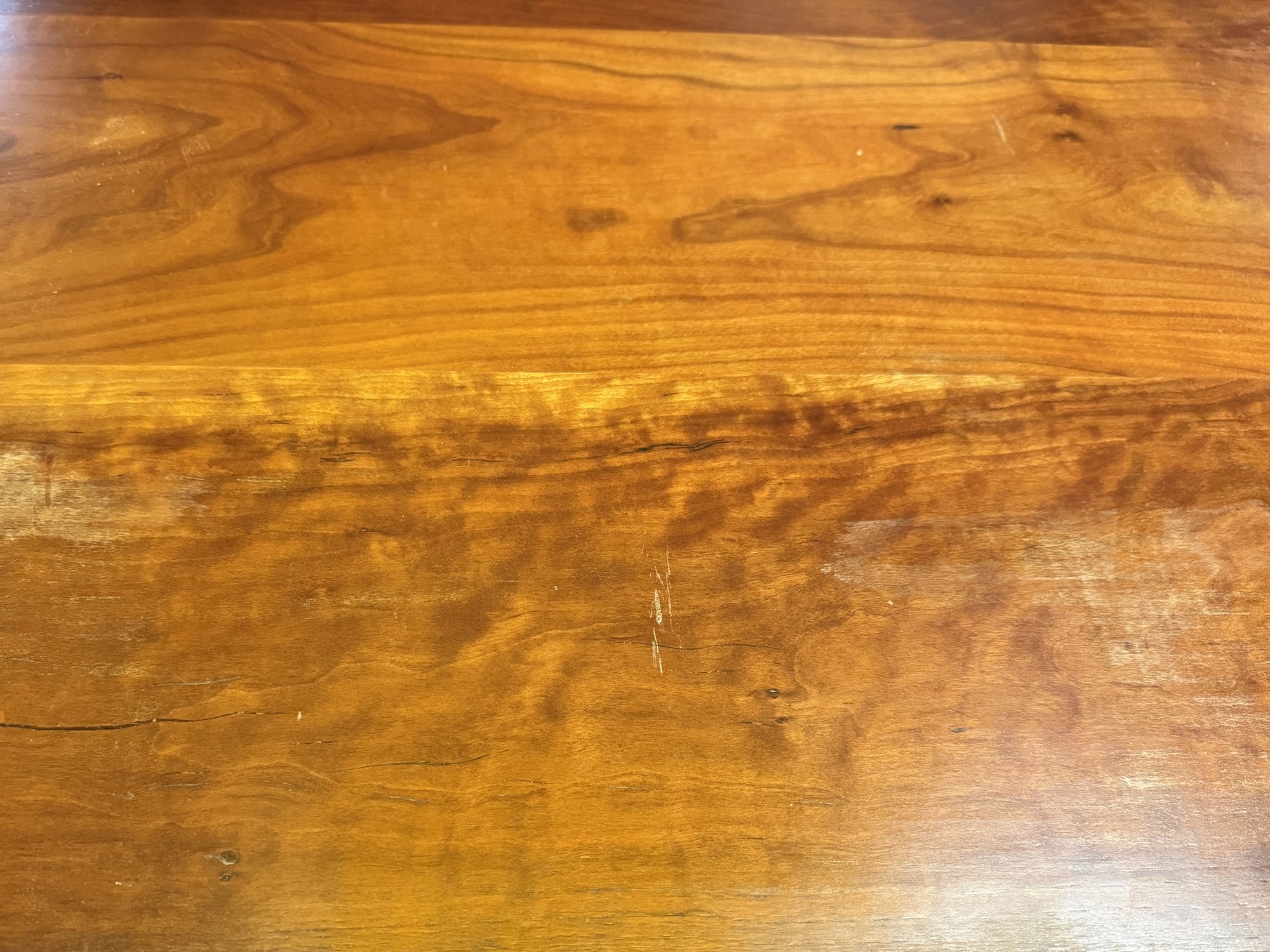
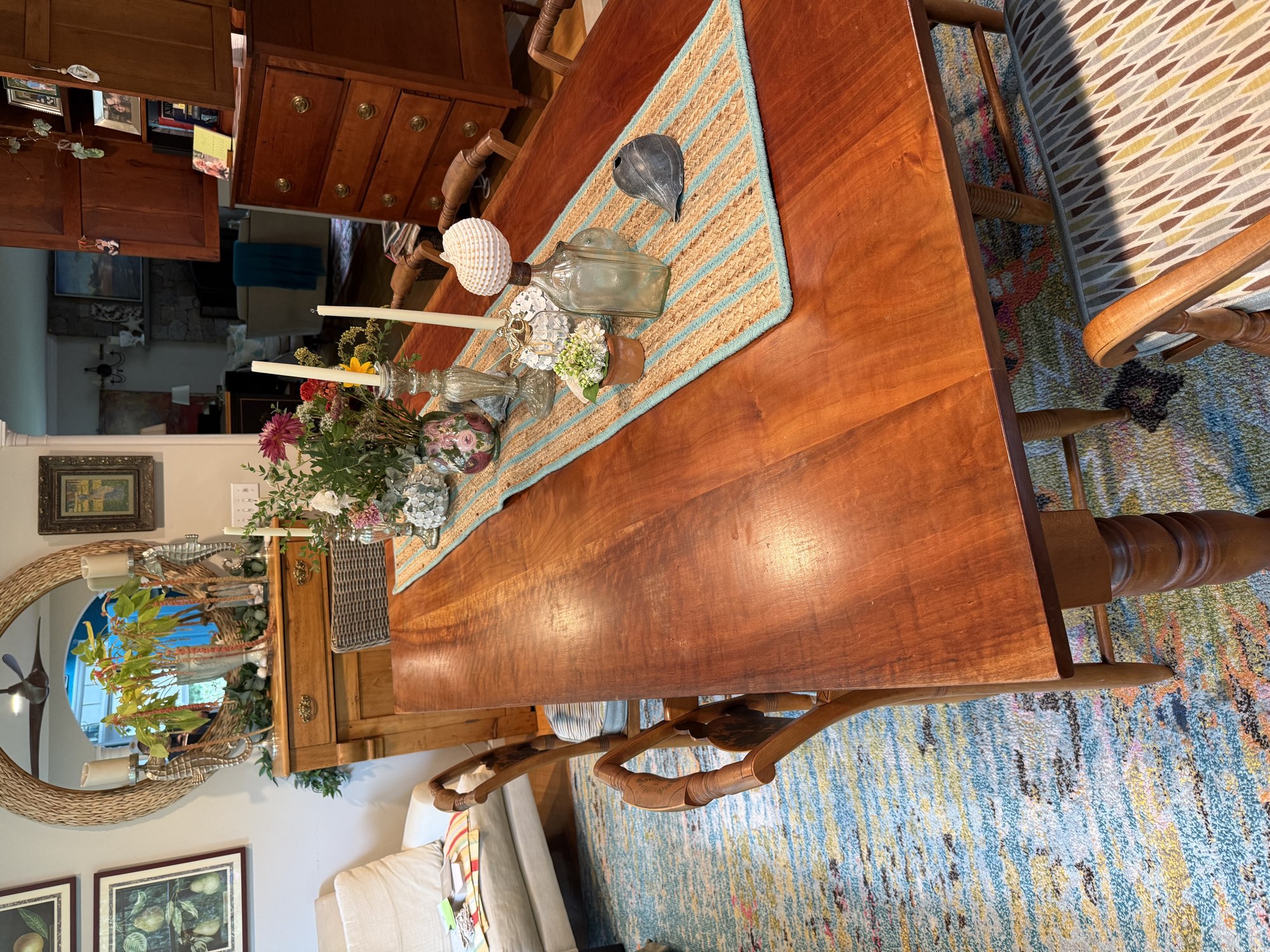
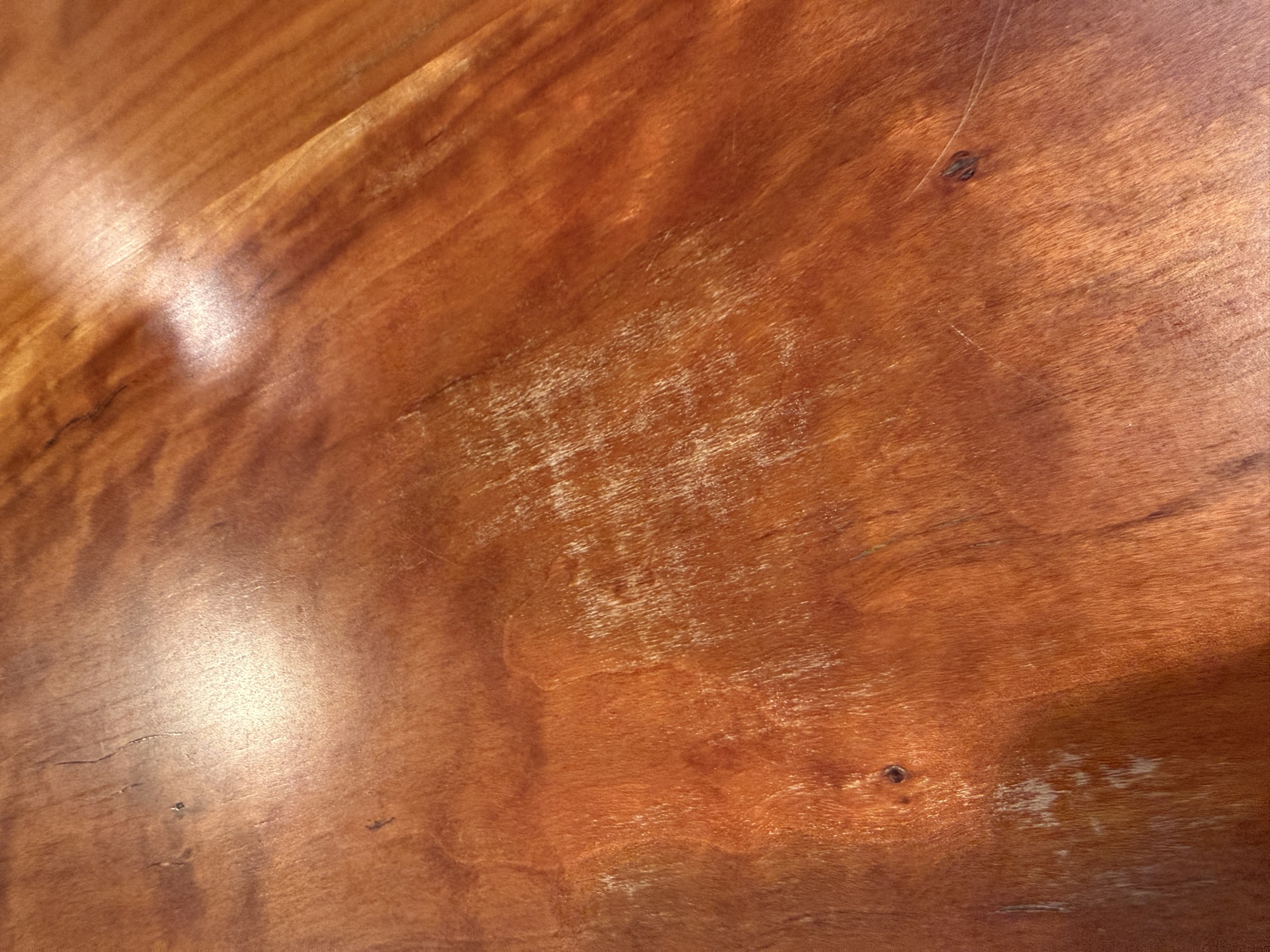
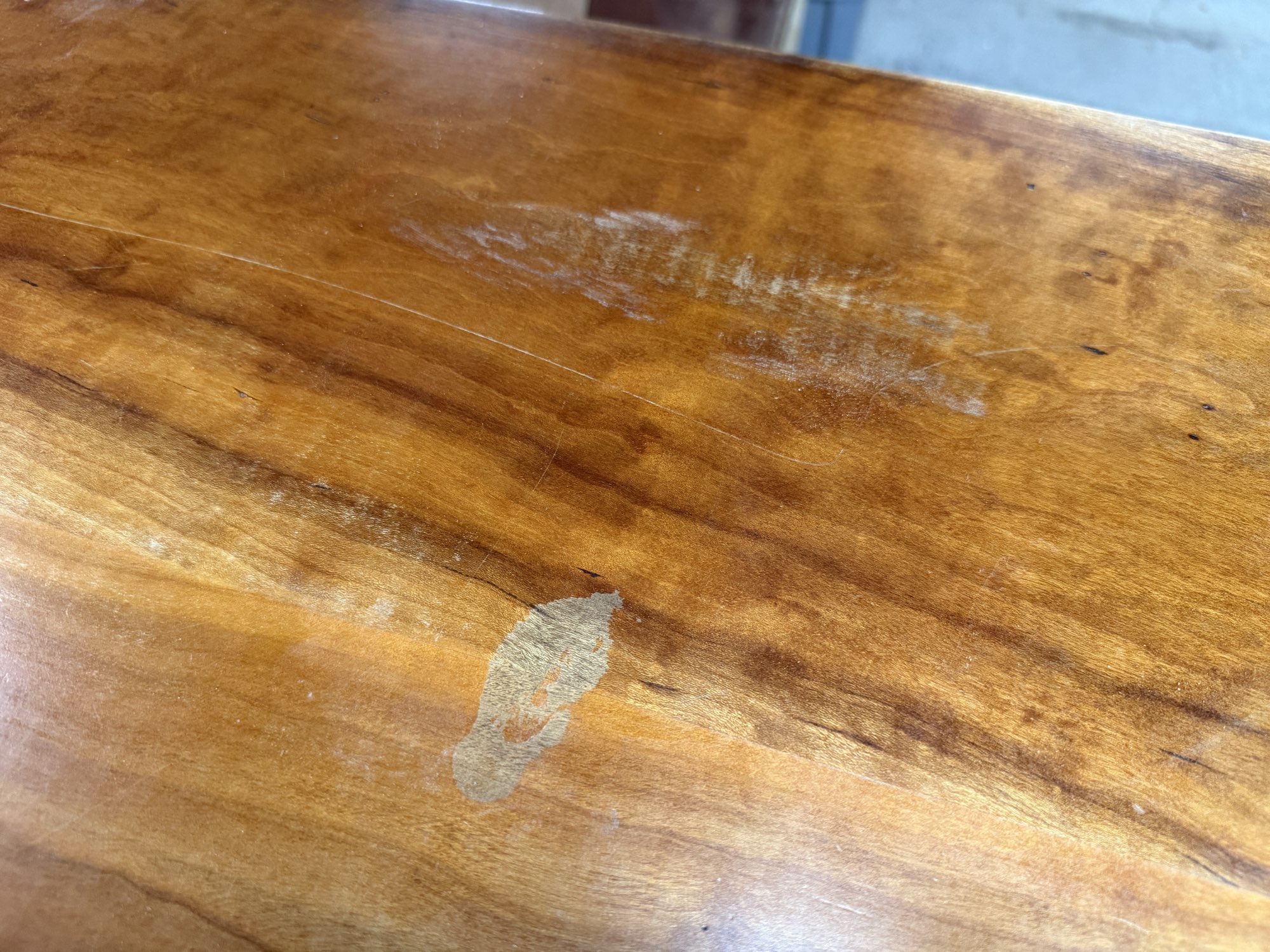
This dining room table belongs to a home in Wakefield, Rhode Island. The top had white, cloudy patches through the finish, scratches, and a dark stain set into the surface.
The tabletop came back to the shop to be refinished, then went home to Wakefield. Before any sanding started, there were two questions that had to be answered — because the answers decide whether a top gets sanded, stripped, or barely touched at all.
 BeforeAfter
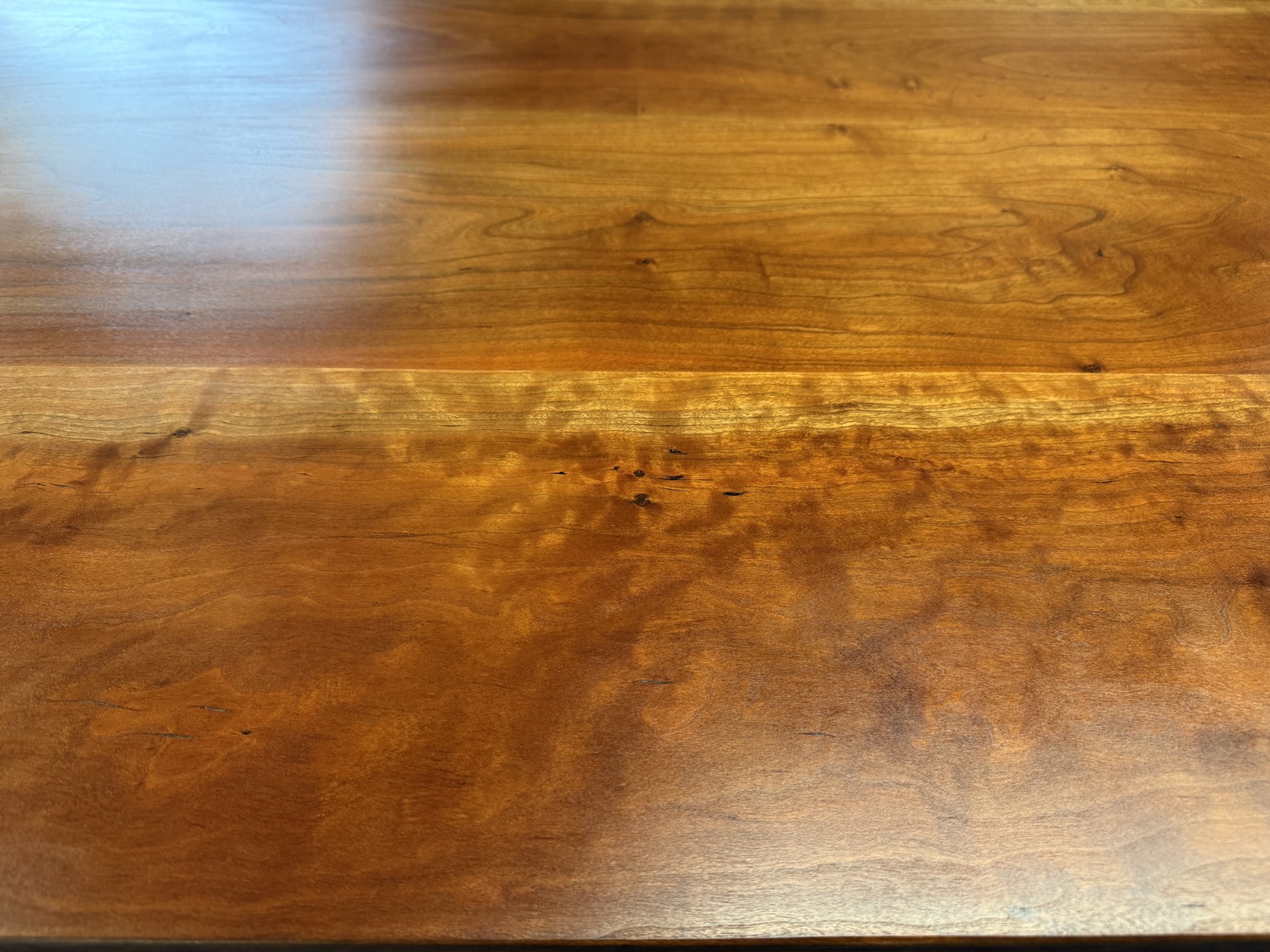
Drag to compare. The same stretch of tabletop in the shop, before sanding and after the new finish.
What It Came In With
The finish on the top had gone white and cloudy in patches, there were scratches across the boards, and one spot had a dark stain sitting in the surface.
None of that meant the table was finished. It meant the finish was.
Question One: Hardwood or Veneer?
The first thing to find out is whether the top is solid hardwood or a thin veneer glued over something else. The answer is at the edge. This top showed three clues that it was solid:
- —The color and grain pattern flow over the edge and continue down the sides of the boards
- —The round-over on the edge is large — far deeper than a veneer layer is thick
- —The growth rings are visible on the end grain at the end of each board, which veneer doesn't show
Why It Matters
Solid hardwood can be sanded, which makes the job far more straightforward. Veneer is a different story. It's thin enough that a power sander can cut straight through it, so on a veneered top we'd keep the sander off it entirely — at most a light hand sanding at 220 grit.
Question Two: What Finish Is On It?
The second question is what the existing finish actually is. Each common finish reacts to a different solvent, so a few quick tests on a rag, in an inconspicuous spot like the underside, narrow it down:
- —Lacquer thinner — if the finish gums up, it's lacquer
- —Denatured alcohol — if color comes up onto the rag, it's most likely shellac
- —Painter's solvent — if it leaves a waxy texture on the rag, it's most likely a wax finish
- —If none of them touch the surface, it's most likely a polyurethane or varnish
Sanding It Back
On this table, none of the solvents touched the surface. The finish was most likely an oil-based polyurethane, and since the top was solid hardwood, the plan was simple: sand the old finish off and start fresh.
Had the tests turned up lacquer, the approach would have been different. Lacquer comes off well with a citrus stripper, which is gentle and doesn't damage the wood — strip the old finish, then lay down a new coat.
The Finished Result
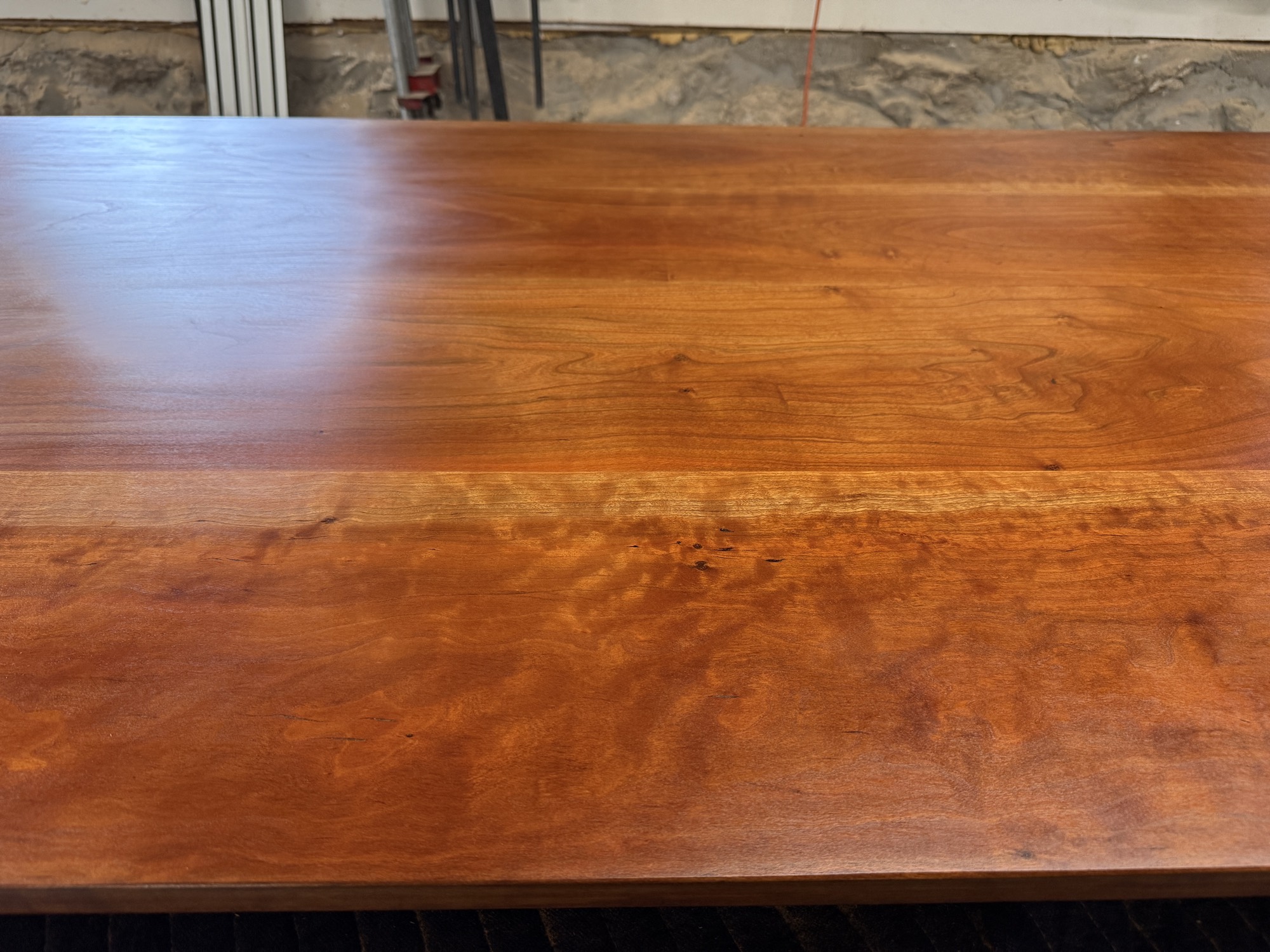
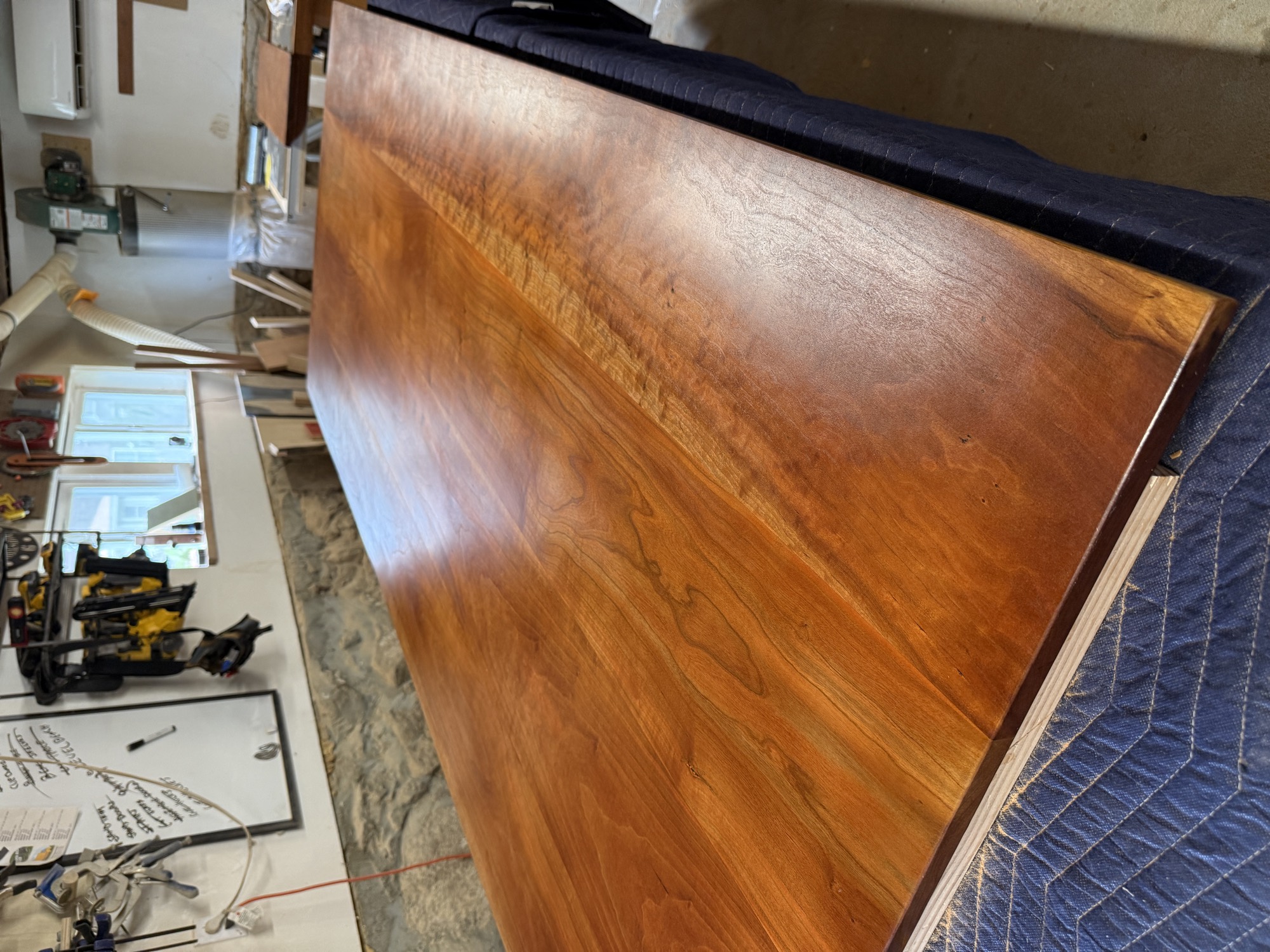
With the old finish gone and a new one on, the top reads as one even surface again, and the figure in the boards shows through clearly.
Details
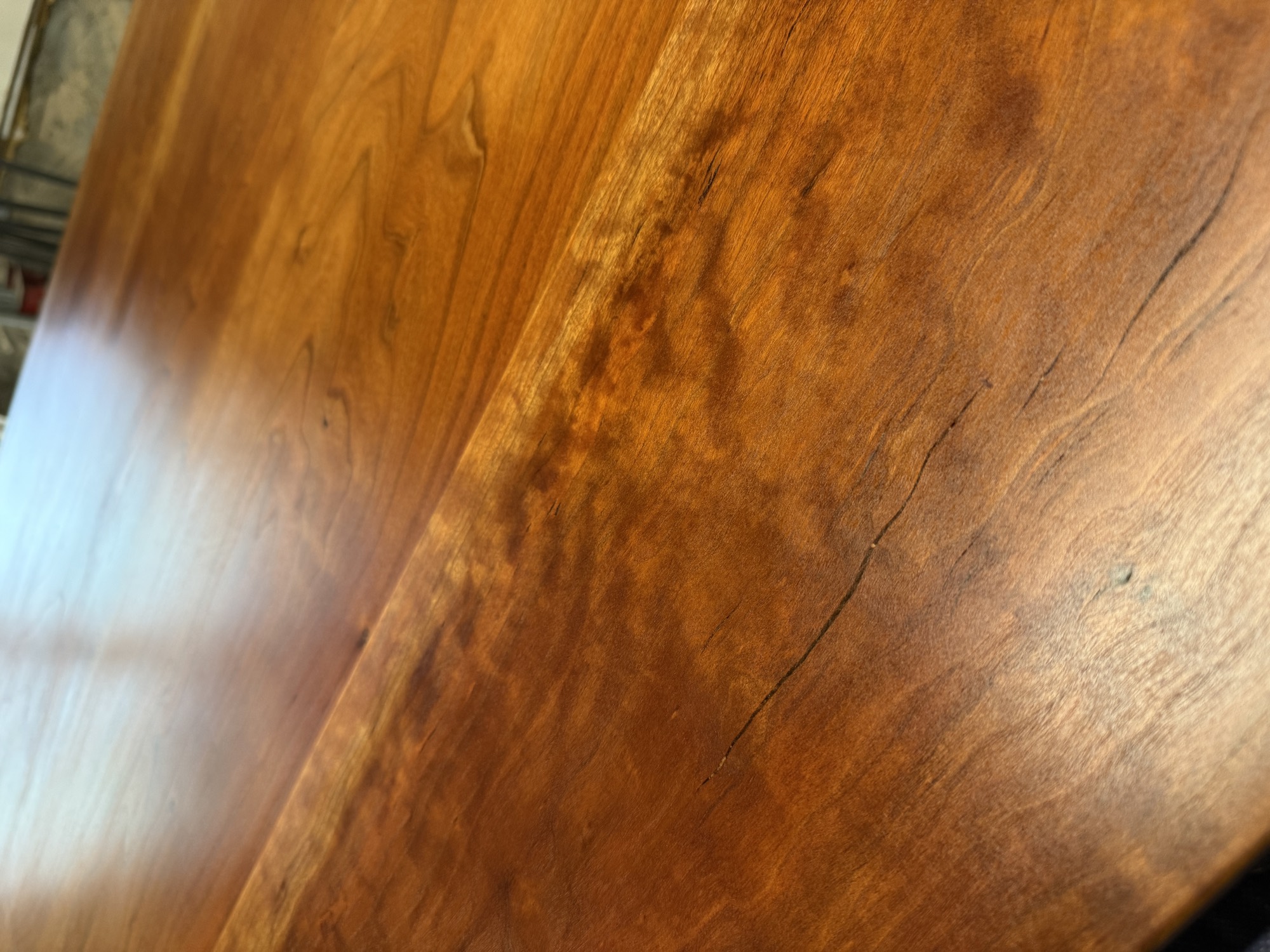
Up close, the figure across the boards is what the new finish brings forward.
Have a Table Worth Refinishing?
The Corner Woodshop repairs, refinishes and restores furniture for homes throughout Wakefield, South Kingstown, Narragansett and surrounding Rhode Island communities.
Every refinish starts with the same two questions — what the piece is made of and what's on it — so the work fits the furniture instead of the other way around.
Send a few photos and we'll take a look.
Request a QuoteWakefield Built-In Questions
How can you tell if a tabletop is solid wood or veneer?+
Look at the edge. On solid hardwood the color and grain flow over the edge and down the sides, a deep round-over is possible because the wood is thick all the way through, and you can see growth rings on the end grain of each board. Veneer is a thin layer, so it can't show any of those.
How do you know what finish is on my table?+
With solvent tests in a hidden spot like the underside. Lacquer thinner gums up lacquer, denatured alcohol pulls color off shellac, and a painter's solvent leaves a waxy texture on a wax finish. If none of them touch the surface, it's most likely a polyurethane or varnish.
Do you sand or strip a table finish?+
It depends on what the table is made of and what's on it. Solid hardwood under a polyurethane, like this Wakefield table, gets sanded. Lacquer comes off well with a gentle citrus stripper. Veneer is too thin for a power sander, so it gets a light hand sanding at most.
Do you refinish dining tables in Wakefield?+
Yes. Wakefield is home turf for The Corner Woodshop, and refinishing is part of our furniture repair and restoration work. Send a few photos of the table and we'll tell you whether it needs a full refinish, a repair, or a lighter touch — the assessment is free.
What parts of Rhode Island do you refinish furniture in?+
The Corner Woodshop repairs, refinishes and restores furniture for homes throughout Wakefield, South Kingstown, Narragansett, North Kingstown, East Greenwich, Charlestown and the surrounding Rhode Island communities.
Have a project in mind?
Whether it's custom built-ins, a new table, or repairing a piece you love — let's talk through your ideas. The first consultation is free, with no obligation.
Prefer to talk it through? Call (401) 515-5959 or email jason@cornerwoodshop.com